
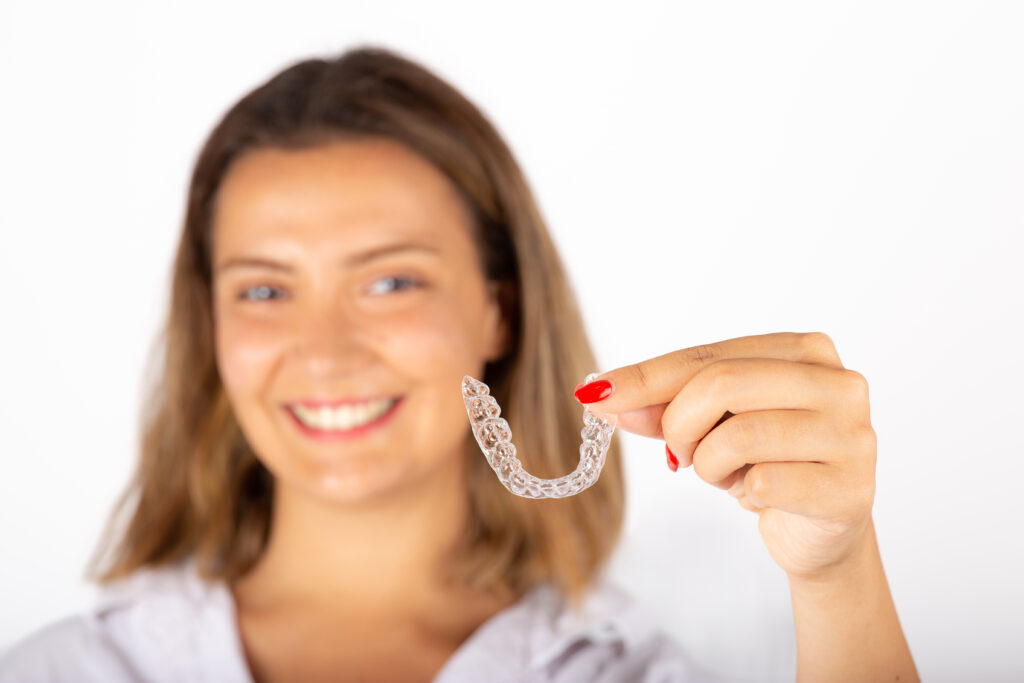
There is something quietly exciting about the Invisalign journey. Unlike traditional braces, where metal brackets and wires make changes visibly obvious from day one, Invisalign works in a subtle, gradual, and deeply personal way. Each aligner moves your teeth a fraction of a millimeter at a time. Before you know it, the smile looking back at you in the mirror is noticeably different from the one you started with.
But because the changes happen so gradually, many patients find themselves wondering whether their treatment is actually working. They look for signs of progress, compare their current smile with old photos, and sometimes feel uncertain about what to watch for along the way. At Murphy Dental Group, PLLC, Dr. Brandon Murphy, a Top 1% Diamond provider of Invisalign, believes that an informed patient is an empowered patient.
Understanding how Invisalign changes your smile, step by step, makes the entire experience more meaningful, motivating, and rewarding.
Here is everything you need to know about how Invisalign gradually transforms your smile, along with what to look for as your treatment unfolds.
The Early Weeks: Sensing Change Before You See It
During the first few weeks of Invisalign treatment, most patients do not notice dramatic visual changes in their smile. What they do notice is physical sensation. As highlighted in Dr. Brandon Murphy’s Invisalign tips, when you switch to a new aligner, it fits snugly. It may feel tighter than the previous one. This tightness is not uncomfortable or worth worrying about. This confirms that the aligner is doing its job.
This pressure, most noticeable in the first day or two after switching aligners, indicates that the teeth are being guided into a new position. As the days pass and your teeth adjust, the aligner becomes more comfortable, signaling that it is time to progress to the next one.
In these early stages, look for small but meaningful signs of progress. You may notice that your bite feels slightly different when you close your mouth. Certain teeth that previously felt crowded may begin to feel a little more room. These early sensations are the very first signs that your smile is quietly shifting in the right direction.
Weeks Four to Eight: The First Visible Shifts
By the fourth to eighth week of treatment, most patients begin to notice the first visible changes in their smile. As shared in Dr. Brandon Murphy’s Invisalign insights, teeth that were overlapping or slightly rotated may start to appear more upright and better aligned. Gaps between certain teeth may begin to close, or spacing may start to even out across your smile.
This is often the stage where patients experience their first genuinely exciting moment of the Invisalign journey. Holding up an old photo next to a current one and seeing even a subtle difference is deeply motivating. Dr. Murphy encourages his patients to take progress photos regularly, as these visual comparisons make the gradual transformation far easier to appreciate.
It is also around this time that people in your life may begin to notice something different about your appearance, even if they cannot quite put their finger on what has changed. This is a natural and wonderful part of the Invisalign experience. The changes are real, they are happening, and they are building momentum.
The Middle Phase: Alignment Takes Shape
As you move into the middle phase of your Invisalign treatment, the changes become more pronounced and easier to see. Crooked teeth begin to straighten noticeably. Gaps close more visibly. The overall symmetry of your smile starts to improve in ways that feel genuinely significant.
This is also the phase where patients often gain a clearer sense of what their final smile will look like. The roadmap Dr. Murphy laid out at the beginning of treatment starts to feel real and tangible rather than abstract. Patients who may have started the journey with doubts about whether the process was working often find that the middle phase is where their confidence in Invisalign truly solidifies.
It is worth noting that some teeth move faster than others. The position of certain teeth in the arch, the density of the surrounding bone, and the specific movements required all influence how quickly visible progress occurs in each area of the mouth. This is completely normal and is accounted for in Dr. Murphy’s treatment planning. As emphasized in Dr. Brandon Murphy’s Invisalign tips, trust the process, stay consistent with wearing your aligners for the recommended 22 hours per day, and the results will follow.
The Final Phase: Refinements and the Finishing Touch
As you approach the end of your Invisalign series, the focus shifts from major alignment changes to refinements. These final aligners fine-tune each tooth’s position, perfecting the small details that make the difference between a good result and an exceptional one.
At this stage, you may be given refinement aligners, which are additional sets designed to address any areas that need further adjustment. This is a standard and expected part of the Invisalign process for many patients, not a sign that something has gone wrong. Dr. Murphy carefully monitors progress at each checkup to determine whether refinements are needed and to ensure the outcome aligns precisely with the original treatment plan.
The finishing phase is also when patients truly begin to see the full picture of their transformation. Looking at side-by-side photos from the beginning and end of treatment often produces an emotional response. The smile that once made me self-conscious has become something to be genuinely proud of.
Explore Invisalign Stories Guided by Dr. Brandon Murphy
Experience matters when it comes to aligner care. Patients who explore Invisalign stories guided by Dr. Brandon Murphy often mention feeling supported and informed at every step.
With over 1200 hours of continuing education, advanced training, and a commitment to staying current with evolving techniques, leadership at Murphy Dental Group, PLLC reflects a deep investment in patient outcomes. After earning a Fellowship award, Dr. Murphy achieved his Master’ship award in 2025, a distinction held by less than 2 percent of dentists.
In addition, Fellowship from the Academy of Clear Aligners is reserved for top clinicians in North America. As of 2025, fewer than 140 providers have earned this recognition.
Combined with being a Top 1% Diamond Invisalign provider, these credentials reassure patients that their care is guided by experience, precision, and ongoing education.
You can learn more about the approach and philosophy behind this care by visiting the Meet the Doctors page.
See Real Smile Transformations Shared by Invisalign Wearers
Transformation stories inspire confidence. Patients love seeing progress, not just in photos but in everyday interactions.
When you see real smile transformations shared by Invisalign wearers, you notice more than alignment changes. You see renewed confidence, relaxed expressions, and genuine smiles.
These transformations reflect consistency, professional planning, and personalized care. They also remind future patients that meaningful change happens gradually and steadily.
Getting Started With Care at Murphy Dental Group, PLLC
Patients interested in aligner care can explore available options through the practice’s dedicated Invisalign services page. Flexible financing options are also available; details are available in the payment plans section.
Scheduling a visit is easy through the contact us page. Patients can also find the office location using this Google Maps link or plan their visit with driving directions.
Frequently Asked Questions
1. How long does it typically take to see results with Invisalign?
Invisalign treatment takes 6-12 months. Significant visible improvements generally become apparent around the midpoint of the treatment timeline, though timing varies with each case’s complexity.
2. What should I do if my aligner does not feel tight when I switch to a new one?
A new aligner that does not feel snug may indicate that the previous aligner was not worn for the full recommended time. Make sure you wear each aligner for 22 hours per day before moving on to the next.
3. Is it normal for some teeth to move faster than others during Invisalign treatment?
Yes, this is completely normal. Different teeth require different types and amounts of movement, and some respond more quickly than others, depending on their position and the surrounding bone structure.
4. Can I speed up my Invisalign results?
The most effective way to stay on track is to wear your aligners consistently for the recommended 22 hours per day, switch to the next aligner on schedule, and attend all your checkup appointments with Dr. Murphy.
5. What happens if I skip wearing my retainer after Invisalign?
Skipping retainer wear allows teeth to gradually drift back toward their original positions, undoing the results of your Invisalign treatment.
Conclusion
Invisalign is a journey, and like all meaningful journeys, it unfolds one step at a time. The changes are gradual, the progress is cumulative, and the destination, a beautifully aligned, confident smile, is absolutely worth every aligner along the way.
At Murphy Dental Group, PLLC, Dr. Brandon Murphy, a Top 1% Diamond provider of Invisalign, walks alongside his patients through every stage of the Invisalign process. From the first scan to the final retainer, his commitment is to ensure that each patient feels informed, supported, and genuinely excited about the smile they are building. Reflecting Dr. Brandon Murphy’s aligner expectations, if you are considering Invisalign or are already on your treatment journey, know that every small shift brings you closer to the smile you deserve.
Your transformation is already in progress. Keep going.
Remember: Wearing your aligners consistently for at least 22 hours a day is the single most important factor in keeping your Invisalign treatment on track and achieving your best possible result.
Disclaimer: This blog is intended for informational purposes only and does not substitute for professional dental advice, diagnosis, or treatment. Please consult Dr. Brandon Murphy or a qualified dental professional for guidance specific to your individual orthodontic needs.