
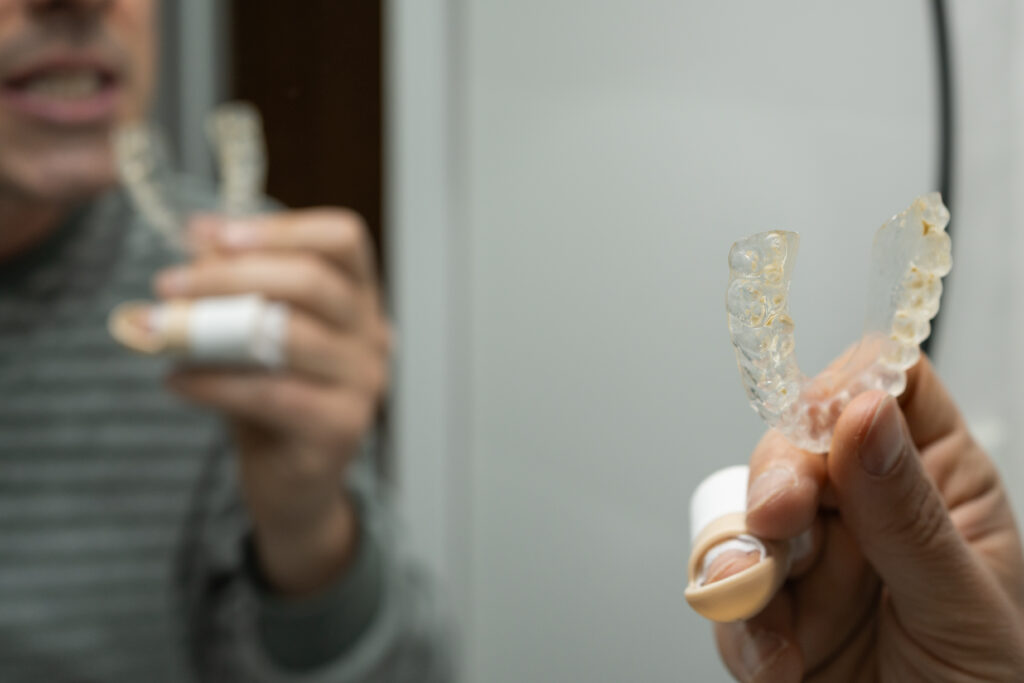
| Quick answer To keep Invisalign clear and odor-free, rinse the trays each time you reinsert them, brush them gently with a soft toothbrush and clear soap, keep your teeth spotless, and give the trays a nightly soak so plaque and bacteria never have time to settle. |
| 22 hours Recommended daily Invisalign wear |
2x daily Minimum tray cleanings |
Nightly Best time for a deep soak |
Key takeaways
|
Keeping Aligners Clear and Odor-Free
Clear aligners stay bright and fresh when you clean them consistently and never give plaque or bacteria a chance to settle. The simplest formula is to rinse the trays each time you put them back in, gently brush them twice a day, keep your own teeth clean, and soak the trays each night. At Murphy Dental Group, PLLC in Oak Park, IL, this is the routine we walk every patient through when they begin treatment.
The daily habits that matter most
A small set of habits does most of the work. Rinsing removes fresh saliva before it dries, brushing lifts the thin film that builds through the day, and a nightly soak resets the trays so nothing lingers overnight. Dr. Brandon Murphy has found that patients who commit to these steps rarely deal with visible discoloration.
What causes discoloration and odor in the first place
Yellow tint and unpleasant smell almost always trace back to the same source: leftover organic material. When saliva, food particles, and natural mouth bacteria stay on the plastic, they create a film that traps color and produces odor. Remove that film often, and both problems fade.
Why Clear Aligners Turn Yellow
Aligners turn yellow when a sticky layer of plaque and biofilm accumulates on the tray and holds onto pigments. The plastic itself does not naturally change color quickly; what you see is buildup sitting on the surface. Understanding the cause makes prevention straightforward.
Plaque and biofilm buildup on the tray surface
Plaque forms on trays the same way it forms on teeth. A soft, nearly invisible layer develops within hours, and if it is not disturbed, it thickens and darkens. Research on cleaning methods shows that regular, gentle cleaning keeps this layer from setting in. A helpful overview of everyday cleaning principles from the American Dental Association explains how consistent home care controls plaque before it hardens, and those same ideas apply directly to your trays. You can read more through the American Dental Association guidance on home oral care, which covers brushing habits that protect both teeth and appliances.
Surface roughness that traps pigments and stains
Smooth trays resist stains far better than rough ones. Once the surface is scratched or worn, tiny grooves catch color from your diet and hold onto it. A comparison study on cleaning agents found that certain methods preserve smoothness and clarity while harsher approaches leave trays more prone to staining. You can review the findings in this randomized study comparing cleaning agents on Invisalign clarity and surface roughness, which highlights why gentle cleaners are the safer long-term choice.
Wearing them nearly all day fuels buildup
Because the recommended wear is about 22 hours a day, trays spend most of their time exposed to saliva and warmth. That constant contact gives buildup more opportunity to form, which is exactly why a steady cleaning rhythm matters so much during active treatment.
Why Aligners Start to Smell
Aligners smell when bacteria and dried debris build up inside the tray and are never fully cleared away. Odor is a signal that something organic is sitting on the plastic longer than it should. The fix is regular cleaning that removes the source rather than masking it.
Bacteria and the oral microbiome inside the tray
Your mouth naturally hosts a community of bacteria, and some of it settles into the snug space between tray and tooth. When that population grows undisturbed, odor follows. Studies looking at oral health during aligner treatment show that steady hygiene keeps this balance in check, as summarized in this review on the impact of clear aligners on oral health and the mouth’s microbiome, which underscores how clean teeth and clean trays work together.
Dried saliva and trapped debris
Saliva that dries on the plastic leaves a residue that both smells and looks cloudy. Tiny food fragments can also work their way under the edges. Rinsing right away and cleaning each day thoroughly prevents these deposits from taking hold.
Skipping the nightly deep clean
The single most common reason for lingering odor is a missed nightly soak. When trays go a full stretch without a proper clean, bacteria multiply, and the smell becomes harder to remove. Making the soak a non-negotiable part of your evening solves most odor complaints.
A Simple Daily Cleaning Routine That Works
A reliable daily routine has three parts: rinse, brush, and keep your teeth clean. None of it takes long, and together these steps stop discoloration and odor before they start.
|
Rinse every time you reinsert the tray Run each tray under cool water before it goes back in. This clears fresh saliva and loose particles so nothing dries onto the plastic during the day. |
|
|
Brush gently with a soft toothbrush and clear soap Use a soft-bristled brush and a small amount of clear, unscented liquid soap to clean the inside and outside of the trays. Rinse thoroughly afterward. Do this at least twice a day. |
|
|
Keep your own teeth spotless before wearing Brush and floss before reinserting your trays. Clean teeth mean less material transfers into the tray, which keeps the plastic clearer for longer. |
Weekly Deep-Cleaning Methods Worth Knowing
A deeper clean once or twice a week keeps trays fresh beyond what daily brushing alone can manage. The goal is to lift any film that daily cleaning missed while protecting the clarity and strength of the plastic.
Soaking solutions and cleaning tablets compared
Dedicated soaking tablets and gentle cleaning solutions both work well when used as directed. A systematic review of cleaning protocols found that several approaches effectively reduce buildup, and you can explore the comparisons in this systematic review of cleaning and disinfection protocols for clear aligners, which weighs the trade-offs between different methods.
| Method | Best for | Keep in mind |
| Dedicated cleaning tablets | Routine weekly soaks | Follow the timing on the package |
| Clear soap and soft brush | Daily gentle cleaning | Rinse well to remove residue |
| Cool water rinse | Every reinsertion | Cool water only, never hot |
Which agents preserve clarity and low roughness
Gentle cleaners keep trays smooth and clear, while abrasive products wear the surface down. A study on color stability found that mild cleaning helps trays hold their original appearance, detailed in this research on the color improvement and stability of clear aligners after cleaning. The takeaway is simple: gentler is better for long-term clarity.
Methods to avoid so trays stay strong and clear
Use these
|
Avoid these
|
Wear Time and Hygiene During 22-Hour Days
Because trays stay in for roughly 22 hours a day, hygiene carries extra weight. The more time the plastic spends in your mouth, the more important it is to clean thoroughly during your short windows out of the trays.
Why the long wear window raises the stakes
Extended daily wear means buildup has more chances to form and less time to be cleared. A committed routine turns this into a non-issue, but neglecting it lets both color and odor develop quickly. Dr. Brandon Murphy reminds patients that consistency, not intensity, is what keeps trays looking new.
Cleaning your smile before each reinsertion
Reinserting trays over clean teeth is one of the easiest ways to protect them. A quick brush clears away anything that would otherwise be sealed against the plastic. This small step pays off in clearer trays and fresher breath.
| A note from Dr. Brandon Murphy “The patients with the clearest, freshest trays are rarely doing anything fancy. They simply rinse often, clean gently every day, and never skip the nightly soak. That steady rhythm is what protects both the plastic and the smile underneath it.” |
Storing trays safely when they are out
Whenever the trays are not in your mouth, keep them in their case. An open counter or napkin invites contamination and drying, both of which lead to odor. A clean, dry case keeps them protected until you are ready to wear them again.
Products and Tools Worth Keeping in Your Kit
A small, well-chosen kit makes the routine easy to maintain wherever you are. You do not need many items, just the right ones used consistently.
Soft brushes, clear soap, and dedicated cleaners
- A soft-bristled toothbrush reserved just for your trays
- Clear, unscented liquid soap for daily cleaning
- Cleaning tablets made for aligners for weekly soaks
- A ventilated case to keep trays safe and dry
What to keep away from your trays
- Whitening or gritty pastes that scratch the surface
- Hot water that can warp the plastic
- Strongly colored rinses that can tint the trays
Find us
Ready to plan your brightest smile? Call our Oak Park, IL office at (708) 524-0330 to book your visit with Dr. Brandon Murphy.
Getting Started With Care at Murphy Dental Group, PLLC
Patients interested in aligner care can explore available options through the practice’s dedicated Invisalign services page. Flexible financing options are also available; details are available in the payment plans section.
Scheduling a visit is easy through the Contact Us page. Patients can also find the office location using this Google Maps link or plan their visit with driving directions.
Meet Dr. Brandon Murphy
Dr. Brandon Murphy is a proud Illinois native who founded Murphy Dental Group, PLLC after gaining valuable experience as an associate dentist. He earned his DDS from the University of Illinois at Chicago and completed a General Practice Residency at Advocate Illinois Masonic Medical Center, where he now holds a faculty appointment mentoring future dentists. With over 1,200 hours of continuing education, he stays at the forefront of CAD/CAM dentistry and clear aligner therapy.
His credentials include a Fellowship and Mastership from the Academy of General Dentistry (the latter held by fewer than 2% of dentists), plus a Fellowship from the Academy of Clear Aligners as a Top 1% Diamond Invisalign provider, a recognition held by fewer than 140 dentists nationwide.
Outside the practice, Dr. Murphy enjoys Chicago’s restaurant scene, cooking, and staying active. For him, a great smile isn’t just a professional goal; it’s a way of life.
Frequently asked questions
| Q: Why do my Invisalign trays turn yellow so quickly? Trays turn yellow when plaque and biofilm build up on the surface and hold onto color from your diet. The plastic itself does not change fast; the tint comes from film sitting on it. Rinsing often, brushing the trays gently twice a day, and soaking them each night usually keep them clear. |
| Q: How do I get rid of the smell coming from my aligners? Odor comes from bacteria and dried saliva collecting on the trays. Clean them with a soft brush and clear soap, rinse thoroughly, and give them a nightly soak in a gentle cleaning solution. Keeping your own teeth clean before reinserting the trays also makes a noticeable difference in freshness. |
| Q: Can I use toothpaste to clean my clear aligners? Regular and whitening toothpastes are usually too abrasive and can scratch the trays, leaving grooves that trap stains and odor. Instead, use a soft-bristled toothbrush with a small amount of clear, unscented liquid soap, then rinse well. This gentle approach protects the smooth, clear surface far better. |
| Q: How often should I deep clean my Invisalign trays? A deeper clean once or twice a week works well for most people, alongside daily rinsing and gentle brushing. A weekly soak in an aligner cleaning tablet solution lifts any film that everyday cleaning missed. If you notice buildup forming faster, you can soak a bit more often. |
| Q: Will cleaning tablets damage the clarity of my aligners? Cleaning tablets made for aligners are gentle and safe when used as directed and generally preserve clarity. Problems arise from harsh scrubbing, abrasive pastes, and hot water rather than proper tablets. Follow the package timing, rinse well afterward, and your trays should stay clear and comfortable. |
Remember: Clear, fresh aligners come down to daily rinsing, gentle cleaning, and a nightly soak. Keep the routine simple and stay consistent.
Disclaimer: This article is for general information only and is not a substitute for personalized dental advice. Please consult Murphy Dental Group, PLLC for guidance specific to your treatment.