
|
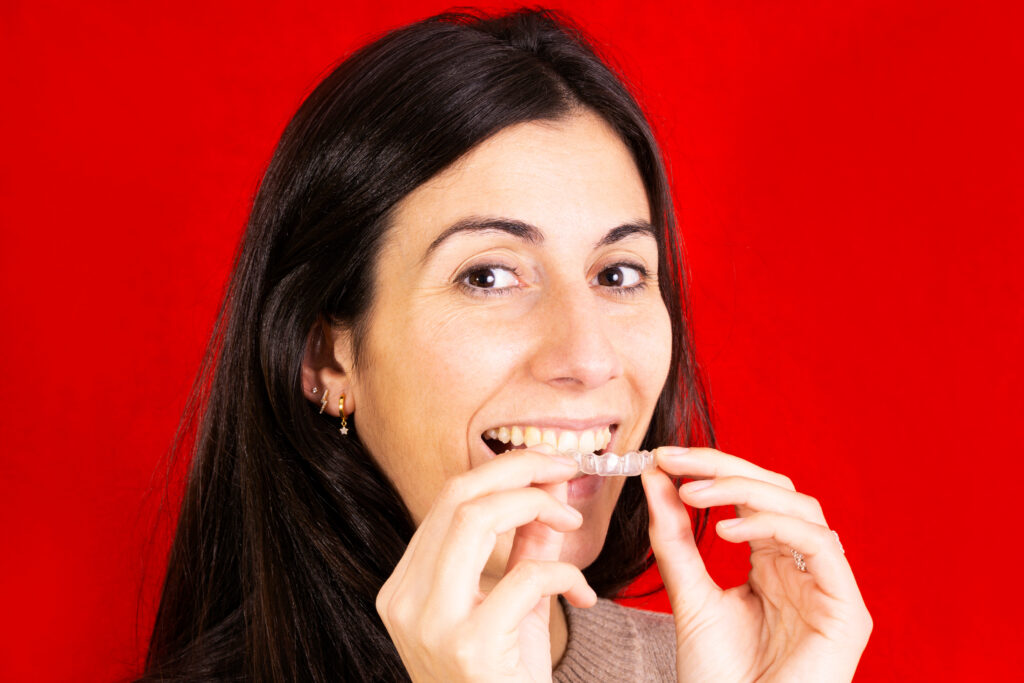
Quick answer Yes, keep your most recent aligner trays. They can serve as a short-term backup if a retainer breaks or is lost, and they give your dental team a physical record of your progress. Older trays from earlier stages can be responsibly recycled. |
|
22 hours Daily aligner wear time |
Key takeaways
|
Should You Keep Your Old Aligner Trays?
Yes, you should keep at least your final set of aligner trays, and there is real value in holding onto the rest for a while. Dr. Brandon Murphy, a Top 1% Diamond provider of Invisalign, recommends keeping your last set of trays as a short-term safety net in case your retainer breaks or goes missing, while earlier sets provide a physical timeline of how your smile has changed. Once your smile is settled and you have a stable retainer, older trays can be cleaned and recycled responsibly.
The short version for Oak Park patients
Keep your most recent trays somewhere safe and dry. They are the closest match to your finished smile, which makes them the most useful for a temporary hold. Trays from the beginning and middle of treatment no longer fit and cannot be reused to move teeth, so those are the ones you can eventually recycle.
When holding onto trays matters most
Keeping trays matters most in the window right after your active treatment ends. This is when your teeth are most likely to drift if wear becomes inconsistent. Having your last set nearby gives you a practical option while you arrange a proper retainer through your dental team.
A note from Dr. Brandon Murphy, DDS
“I tell my patients to treat their final trays like a spare key. You may never need them, but on the day a retainer cracks or disappears, having that set on hand can save your smile from unwanted movement until we get you a lasting replacement.”
Reason 1: Your Last Trays Work as an Emergency Backup
Your final aligner trays can serve as a temporary backup if your retainer is lost or damaged. Because they closely match the position your teeth reached at the end of treatment, they can help hold things steady for a short period while you wait for a replacement retainer.
Bridging the gap if a retainer breaks or is lost
Retainers get stepped on, chewed by pets, and left behind in hotel rooms. If that happens, your last set of trays serves as a stopgap so that your smile does not shift while you obtain a new retainer. This short-term use is one of the most commonly cited reasons to save your final trays, according to dental guidance on old trays.
Preventing teeth from shifting while you wait for a replacement
Teeth naturally tend to move back toward their earlier positions when nothing is holding them. Slipping in your most recent trays helps limit that drift. Keep in mind that old trays are meant as a temporary bridge, not a permanent fix. Reusing worn trays over the long term is not recommended, as noted in clinical advice on tray reuse.
Reason 2: Old Trays Help Track and Verify Your Progress
Old trays give you and your dental team a physical record of how your teeth moved from start to finish. Each tray represents a specific stage, so the full set tells the story of your treatment in a way photos alone cannot.
A physical record of how your smile changed
Lining up your first tray next to your last is a striking way to see how far your smile has traveled. Many patients find this motivating, and it can help you appreciate why maintaining the result is worth the effort.
Why your dental team may reference earlier stages
If a question comes up about your bite or a tooth position, having earlier trays available can help your dental team review the sequence of movement. This is not always necessary, but it can be a helpful reference point during a checkup. Keeping them organized in order makes any future review simpler.
Reason 3: Protecting Your Long-Term Results
Protecting your finished smile depends on consistent wear during treatment and steady retainer use afterward. Old trays only temporarily support this goal, while a fitted retainer keeps your alignment stable for the long haul.
How clear aligner stability depends on consistent wear
Clear aligner results rely on wearing your trays as directed, which for Invisalign means about 22 hours each day, all the time except during your oral hygiene routine. Consistent wear allows teeth to move and settle predictably. Research on clear aligner outcomes highlights that stability improves when wear is steady and supported by proper retention afterward, as discussed in this review of clear aligner stability and success.
The role of retainers in maintaining alignment
Once active treatment ends, a retainer becomes the tool that holds everything in place. Teeth can relapse without retention, which is why a well-fitting retainer matters more than an aging tray. The importance of wearing a retainer after treatment is well established, as explained in this overview of why retainers are essential. Think of your old trays as a backup and your retainer as the main plan.
What to Do With Trays You No Longer Need
Trays you no longer need can be cleaned, stored, or responsibly recycled rather than tossed loosely in the trash. Keeping the useful ones in good shape and disposing of the rest thoughtfully is the balanced approach.
Safe storage tips to keep trays usable
Store the trays you plan to keep in a clean, ventilated case, away from heat and direct sunlight. Warmth can warp the material, which ruins the fit you may one day rely on.
|
|
Your first consultation and digital scan We examine your teen’s teeth and capture a precise 3D scan. From this scan, we plan the custom aligners and can often show you a preview of the expected result. |
|
|
Wearing your aligners Your teen wears the aligners for almost 24 hours a day, removing them only to brush and floss. Consistent wear is what drives progress, so we build the routine into daily habits. |
|
|
Checkups along the way We see your teen periodically to confirm teeth are moving as planned and to provide new aligners in the series. These visits keep treatment on schedule. |
|
|
Retainers to protect the result Once teeth reach their final position, retainers help hold the new smile in place so the results last. |
Responsible recycling and disposal options
Clear trays are made from plastic that does not belong in most curbside recycling bins, so ask about dedicated recycling programs instead. Some practices and mail-in programs accept used trays for proper processing. The environmental footprint of aligner plastics is a growing area of study, as outlined in this research on aligner materials and their environmental implications. Community guidance on keeping versus recycling trays is available from this practice resource.
Use these
|
Avoid these
|
Talk With Your Oak Park, IL Dental Team
Your best move is to talk with Dr. Brandon Murphy, a Top 1% Diamond provider of Invisalign, and your Oak Park dental team about when to keep, replace, or recycle your trays and how to keep your smile stable. Personalized guidance beats guesswork, especially when a retainer is involved.
How our family dentistry practice supports your smile
Our practice helps you protect your results with routine checkups, retainer guidance, and answers to everyday questions about your trays. We look at your smile as a whole, from cleanings to maintaining your finished alignment.
When to schedule a checkup or ask about retainers
Reach out if a retainer breaks, if a tray feels loose, or if you notice any shifting in your smile. It is easier to correct small movement early than to wait. Call us at (708) 524-0330 or schedule a visit online to review your options.
Explore Invisalign Stories Guided by Dr. Brandon Murphy
Experience matters when it comes to aligner care. Patients who explore Invisalign stories guided by Dr. Brandon Murphy often mention feeling supported and informed at every step.
With over 1200 hours of continuing education, advanced training, and a commitment to staying current with evolving techniques, leadership at Murphy Dental Group, PLLC reflects a deep investment in patient outcomes. After earning a Fellowship award, Dr. Murphy achieved his Mastership award in 2025, a distinction held by less than 2 percent of dentists.
In addition, a Fellowship from the Academy of Clear Aligners is reserved for top clinicians in North America. As of 2025, fewer than 140 providers have earned this recognition.
Combined with being a Top 1% Diamond Invisalign provider, these credentials reassure patients that their care is guided by experience, precision, and ongoing education.
You can learn more about the approach and philosophy behind this care by visiting the Meet the Doctors page.
See Real Smile Transformations Shared by Invisalign Wearers
Transformation stories inspire confidence. Patients love seeing progress, not just in photos but in everyday interactions.
When you see real smile transformations shared by Invisalign wearers, you notice more than alignment changes. You see renewed confidence, relaxed expressions, and genuine smiles.
These transformations reflect consistency, professional planning, and personalized care. They also remind future patients that meaningful change happens gradually and steadily.
Getting Started With Care at Murphy Dental Group, PLLC
Patients interested in aligner care can explore available options through the practice’s dedicated Invisalign services page. Flexible financing options are also available; details are available in the payment plans section.
Scheduling a visit is easy through the Contact Us page. Patients can also find the office location using this Google Maps link or plan their visit with driving directions.
Frequently asked questions
|
Q: Is there any reason to keep old Invisalign retainers?
Yes. Keeping your most recent set gives you a short-term backup if a retainer is lost or breaks, and it can help prevent your teeth from shifting while you arrange a replacement. Your full collection also serves as a physical record of how your smile changed. |
|
Q: What am I supposed to do with my old Invisalign trays?
Keep your final trays clean, dry, and stored in a cool place as a temporary backup. Older trays that no longer fit can be recycled through a dedicated program rather than reused to move teeth. |
|
Q: Do I throw out my old aligners?
It is better to recycle them than to toss them in the trash. Clear plastic trays usually do not belong in curbside recycling, so look for a mail-in or in-office recycling program and hold onto your last set as a backup. |
Remember: Wear your aligners all the time, about 22 hours daily, except during your oral hygiene routine, and keep your final trays as a temporary backup while a retainer stays your long-term plan.
Disclaimer: This article is for general information only and does not replace personalized advice from your dental team, so please consult a qualified provider about your specific needs.